
Innovate!
On Systematic Innovation and Virtual Products
The original, Hebrew version, of this article was published in "OTOT" - The Israeli Advertiser's magazine, on December 1996.
By Ari Manor, CEO, ZOOZ Ltd.
On April 1st, 1995, just like in previous years, Volkswagen put out an advertisement in the German newspapers that was meant as a practical joke (April Fools Day). The advertisement featured a strange version of the VW Polo, in which each external sections of the car (door, hood, etc.) were painted different colors. To the company’s surprise, the model, named the Polo "Harlequin" (after the famous clown), became a widespread success. In response to the hundreds of phone calls from customers inquiring about the price of the new model and where it could be purchased, Volkswagen's management decided to turn the lark into a real product. Today, the Harlequin sells successfully throughout the world. In light of this success, Seat (which belongs to the Volkswagen corporation) came out with a similar model.
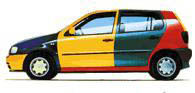
Figure 1: The VW Harlekin car that started as an advertising gimmick and turned into a popular model.
The question remains: How is it that a company with such a large R&D budget, employing some of the top designers in the world, arrived at the idea of the "Harlequin" entirely by chance? Why did the comprehensive market research conducted by Volkswagen and other leading car manufacturers fail to predict the need in the market for an unusually painted car?
The answer to this question seems to lie in today's methods of new product development. Most of the effort in this field is invested in identifying new needs using a wide range of marketing research tools. The common practice is to begin by understanding the customer's needs ("the customer is always right"), and then to develop products accordingly. Although this approach is often successful, it has two patent disadvantages. The first is that it is difficult to find a "surprising" new need which the competitors, who conduct similar surveys and focus groups, are unaware of. The second, more critical disadvantage is that many new products simply cannot be predicted, be it by customers, research or focus groups. For example, if a comprehensive national survey had been conducted in the United States 120 years ago just before the invention of the telephone, in an attempt to locate new communications needs, it is highly doubtful that even a single participant would have suggested "a device that will enable me to converse with my aunt in Detroit from my home in Washington".
Responding to new product concepts
Similarly, surveys conducted on car design did not yield any specific requests for multi-colored cars. However, when customers actually saw the Harlequin model, many quickly identified its advantages and even sought to purchase "this colorful new car that suits my personality". While consumers are hard put to predict new products, it's quite easy for them to relate to a suggested new product, pointing to its advantages, potential benefits, and the needs it might fill.
We have thus seen that in order to develop certain products, neither needs nor consumers can be taken as a starting point. But where then should the search for such new products begin? One place to start is the existing products themselves. Each existing product contains a hidden treasure of knowledge: its evolution, the various needs which it has filled over the course of its evolution, its various characteristics, etc. Moreover, as we shall see, development of a product belonging to one field can serve as a rich source of ideas for the development and improvement of products in a completely different field.
Over the past few years, a thinking tool called Systematic Inventive Thinking For Marketing has been developed precisely in order to generate ideas for original products and services using existing products. Yanko Goldenberg and Roni Horowitz, researchers at the Open University in Tel Aviv, developed the system in cooperation with the Symbol Peres Advertising Agency and its subsidiary company, SIT (Systematic Inventive Thinking).
The secret behind the system is a two-step process (see fig. 2):
First, one studies a wide variety of original products in search of their common attributes and underlying logic.
Second, the underlying logic identified in the first step is then applied to existing products, creating changes in them that lead to the development of original new products.

Figure 2: SIT uses the underlying logic of a wide variety of original products in order to creatively develop new products.
Following is a description of one such underlying logic and a demonstration of how it can be used to arrive at original ideas. But first, try to see if you can identify the underlying logic common to the following products and services (hint - focus on what makes these products innovative):
- The Polo Harlequin model, as described above .
- A therapeutic mattress in which the center is made of stiffer materials than the sides.
- Shoes with width measurements .
- Bi-focal glasses (geared for both near and far-sightedness).
- Free Domino's Pizza if delivery time exceeds half an hour.
__________________________
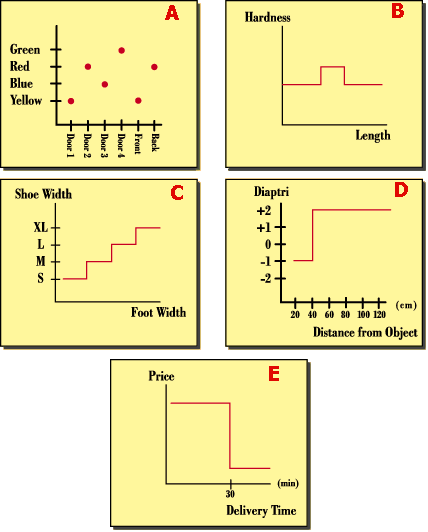
The common logic underlying all of the products and services listed on the previous page lies in the creation of a new relationship between two variables that were not previously related.
In the Harlequin Polo for example, there is a dependence between color and the various external sections of the car (table 3A), while the mattress exhibits a relationship between the length of the mattress and its degree of stiffness (table 3B). Similarly, the innovation in shoes that offer width sizes lies in adjusting the width of the shoe to the width of the wearer's foot (table 3C), while bi-focal eyeglasses create a link between the focus of the lens and the object being watched (table 3D). Domino's introduced a relationship between delivery time and Pizza price (table 3E). This relationship incidentally, played a decisive role in the company's growth from two retail stores in Michigan to a chain of 5,250 branches in 49 countries worldwide, with an annual turnover of 2.6 billion dollars.
Adding a Dimension
In Systematic Inventive Thinking, creating a new link between two previously independent variables is called "Adding a Dimension". This is an underlying structure or logic. After being identified and characterized, it can be repeatedly applied to existing products in order to generate new relationships and new original products in a range of different fields. In order to achieve this end, the following step-by-step plan was devised:
Step 1
focuses on an existing product, with the aim of changing it in such a way as to create a new and innovative product. The new product is called a "Virtual Product". It is important to note that the benefits of this new product, the needs which it fulfills, and the market for which it is intended are factors that become clear only during the final stage of the process. This process is certainly counterintuitive, since it runs contrary to the standard practice of identifying customers’ existing needs and creating products that cater to them. But the advantage of the SIT process lies precisely in this reversal, since it is this approach that enables the identification of unpredictable needs like those mentioned above.
The second step is to construct a list of variables related to the product. There are two types of variables: internal and external.
- Internal variables are those variables that are within the manufacturer's control (car color, mattress stiffness and length, shoe width, focal point of the lens, pizza price, etc).
- External variables are those which are directly related to the product, but are not under the control of the manufacturer (the distance of the object seen, the width of the wearer's foot, etc.).
For demonstration purposes let's examine
shoes.
The internal variables of shoes include:
length, width, height, color, material of shoe and sole, height of heel, slope of the insole (relative to the sole), etc.
The external variables of shoes are:
length, width and height of the wearer's foot, slope of the path, age of the wearer, intended use (for example: formal or casual events), season, etc.
The third
stage involves selecting pairs of variables (either in order or at random), and checking to see if there is an existing relationship between them. At least one variable in each pair must be internal (if both are external variables there will be no way to control their relationship). If no dependence exists between the selected variables, an attempt is made to form a relation. If some relation does exist, one should attempt to cancel the link or change it. The aim is to develop ideas for virtual products based on altering the variable reltionships in existing products. At this stage, it is important to try to realize or conceive of the virtual product, to understand how it might look and how it may be constructed.
Realizing the Virtual Product
Following are a number of examples of virtual products based on the variables mentioned earlier.
Height of heel - type of occasion:
Women generally wear high heeled shoes to formal occasions, whereas at other times, they tend to prefer the comfort of flat shoes. Thus, different types of shoes are geared for different types of events. However, there is no specific pair of shoes whose heel-height changes according to the type of event to which it is worn. We can thus generate a shoe in which the heel is detachable, or one in which the heel can be folded according to the formality of the event to which it is worn..
Slope of insole - Slope of path:
No link exists between these two variables, since the slope of the insole is constant, independent of the slope of the path. We can conceive of an insole whose slope changes via the inflation of air, or with the aid of a mechanical device or modular attachments. These would enable an adjustment of the slope of the insole to that of the path, allowing, for example, an upward insole slope when the path takes a downward slope.
Material of sole – purpose of shoe:
Shoes for different uses (volleyball, basketball, jogging, etc.) are characterized by different types of soles. There is no relation however, between the given activity for which a shoe is worn and the material of the sole, since the latter property in any given shoe is always constant. We can conceive of a shoe with a detachable sole that can be replaced by another, or add-ons which can be attached to a base sole, akin to Lego blocks. This would allow users to adjust the sole of one particular shoe to meet various purposes.
Length (and width) of shoe - age of wearer:
At present, when the customer's foot grows larger, his shoe size does not increase correspondingly. We can thus conceive of a shoe (or sandal) which can be lengthened using some simple mechanical device (similar to the old kind of roller-skates).
In the foruth and final stage, the aim is to identify the benefits and a target audience for each virtual product developed, and to rate each product according to its advantages and potential uses. Those ideas that seem most appealing are then further examined through the accepted channels (viability tests, focus groups, etc.).
Height of heel - type of occasion:
A shoe with a detachable or folding heel, geared for both formal occasions (high heel) and casual (low heel) use, intended of course, for women. Advantages include: sparing women the hassle of schlepping two pairs of shoes wherever they go, saving money ("two for the price of one"), comfort (dispensing with the high heel before and after the formal occasion), can be adjusted to the height of the wearer’s date (on a blind date with a tall man, the shoe can be adjusted to make the wearer appear taller).
Slope of insole - Slope of route:
A shoe for trekking (long hikes) and mountain climbing: adjusting the slope of the insole so as to protect the knees during descents and to facilitate climbing. Additional use: Changing the slope of the insole can make the wearer appear taller (even though the external height of the heel remains the same).
Material of sole - purpose of shoe:
A
multi-purpose shoe. By changing the sole, the shoe can be adjusted to suit a variety of (athletic) activities. Advantages: saves space (closet space, lightens the load when traveling), and saves money ("5 for the price of 2" - since the additional soles are not free of charge). It is also economical because when any of the soles wear out, only the sole needs to be replaced. Additional advantage: comfort - the body of the shoe and the path are constant and are adjusted to the foot, thus the wearer is spared the recurring discomfort of breaking in a new pair of shoes.
Length (and width) of shoe - age of wearer:
A shoe or sandal that can be lengthened, geared for infants and small children (whose rate of growth is rapid). Advantages: saves money and shopping time (assuming that the shoe or sandal do not wear out before the foot size changes), emotional advantage (small children tend to become very attached to their possessions, particularly shoes, and refuse to part with them even when they've outgrown them), comfort - fewer uncomfortable new shoes to break in, and the shoe may be adjusted to accommodate more than one family member.
Conclusion
This article focused on a an initial description of Systematic Inventive Thinking and its reverse approach to new product development, and particularly, the thinking tool called "Adding a Dimension". The following articles in this series will focus on other tools in the system. ZOOZ consults various Israeli and international firms on new product development with this systematic approach.
------------------------------------------------------------------------
For your convenience, we offer in-house Systematic Innovation workshops anywhere on the globe. During such workshops participants learn to apply
Thinking Tools while focusing on their own products and services, and typically produce dozens of useful ideas for innovation.
For information about Innovation Workshops click here, or contact us.
Also, feel free to send us your comments, suggestions, and questions.
------------------------------------------------------------------------
The article
is based on:
Goldenberg, J., Solomon, S. and Mazursky, D.; Cluster Concept Dynamics Leading to Creative Ideas Without Critical Slowing Down, International Journal of Modern Physics; October 1996
Goldenberg , J.,
Solomon, S. and Mazursky, D.; Cognitive Templates in New Product
Development, International Journal of Modern Physics; in preparation
------------------------------------------------------------------------
Written by Ari Manor, ZOOZ CEO, and former CEO
of SIT.


